

Afghanistan is one of the historical regions of the world where the remains of thousands of years of human life, civilizations, cultures, religions, knowledge, and art can still be found. Its special geographical location between Central and South Asia made it an important crossroads for civilizations, trade, and cultural connections. Because of this, signs of different historical periods and civilizations can still be seen in many parts of Afghanistan today.
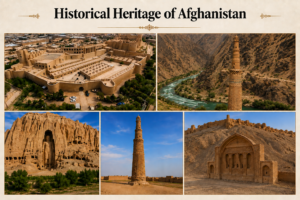
Ancient cities, forts, historical buildings, temples, places of worship, Buddhist caves, statues, minarets, shrines, ancient graves, stone inscriptions, coins, pottery, and many other historical objects have been found in different parts of Afghanistan. These objects are not only remains of the past. They also provide valuable information about the lives, beliefs, knowledge, art, economy, trade, architecture, and social life of earlier generations. They show many signs of human development during those periods.
Afghanistan’s Historical Heritage
Afghanistan’s historical heritage contains signs of different civilizations and historical periods.
Every province and every region of Afghanistan has its own historical sites, objects, and monuments. In some areas, there are ancient objects that are thousands of years old. In others, there are signs of ancient religions and civilizations. Other areas contain scientific, cultural, and architectural heritage from the Islamic period. Together, all these historical sites and objects show the long and continuous history of Afghanistan.
This historical heritage is not only an important part of Afghanistan’s national identity, but also an important part of the history of human civilization. Afghanistan’s historical sites and objects help us understand the lives, ideas, beliefs, art, and achievements of the generations that lived on this land and left their historical marks over thousands of years.
Wars, Illegal Excavations, and Smuggling
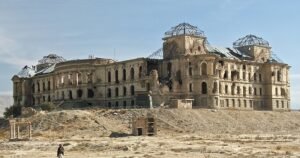
Unfortunately, the long wars in Afghanistan have caused serious damage to a large part of this valuable historical heritage. Some historical sites have been destroyed during wars, some buildings have been damaged, and many historical objects have been lost. The destruction of the historic Buddha statues of Bamiyan is a clear example of a major and irreversible loss to Afghanistan’s cultural heritage.
Illegal archaeological excavations and the smuggling of historical objects are also serious threats to Afghanistan’s cultural heritage. Removing historical objects from their original sites and smuggling them to other countries does not only mean the loss of an object. It also destroys the historical information and connection that the object has with its original location and historical environment.
A Call to UNESCO and International Organizations
We call on UNESCO, the United Nations, international cultural and archaeological organizations, and governments around the world to give serious and continuous attention to protecting Afghanistan’s historical sites and monuments. Afghanistan’s historical sites should be recorded, documented, and scientifically studied. Practical programs should also be developed for their protection and restoration according to international standards.
There should also be stronger international cooperation to prevent illegal excavations, theft, and international smuggling of Afghanistan’s historical objects. Objects that have been illegally taken out of Afghanistan should be investigated according to international laws.
The historical sites and monuments of Afghanistan are not only the heritage of the Afghan people. They are also an important part of the shared history and civilization of all humanity. Protecting them is a shared responsibility of Afghanistan, international organizations, and cultural organizations around the world.